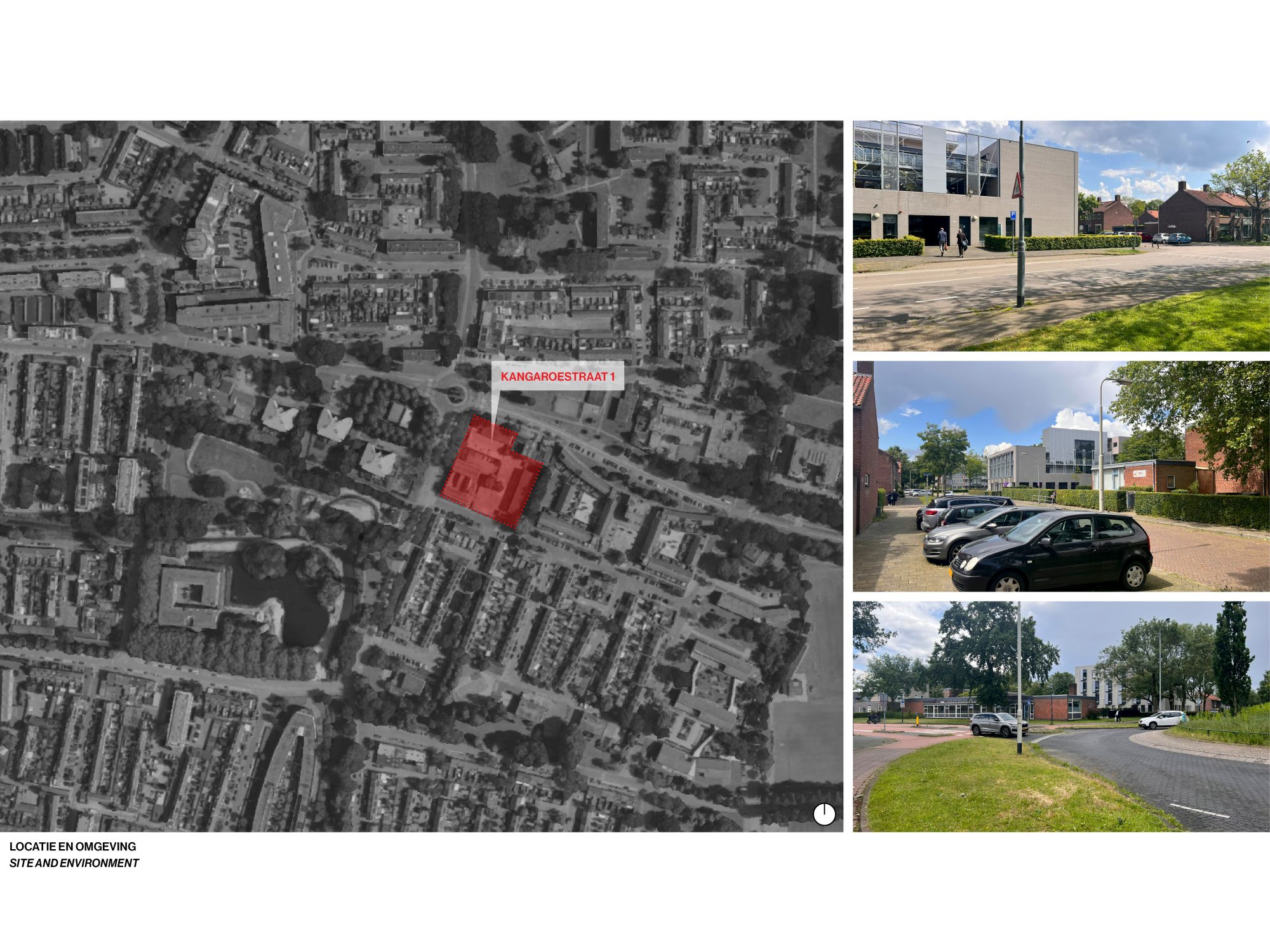
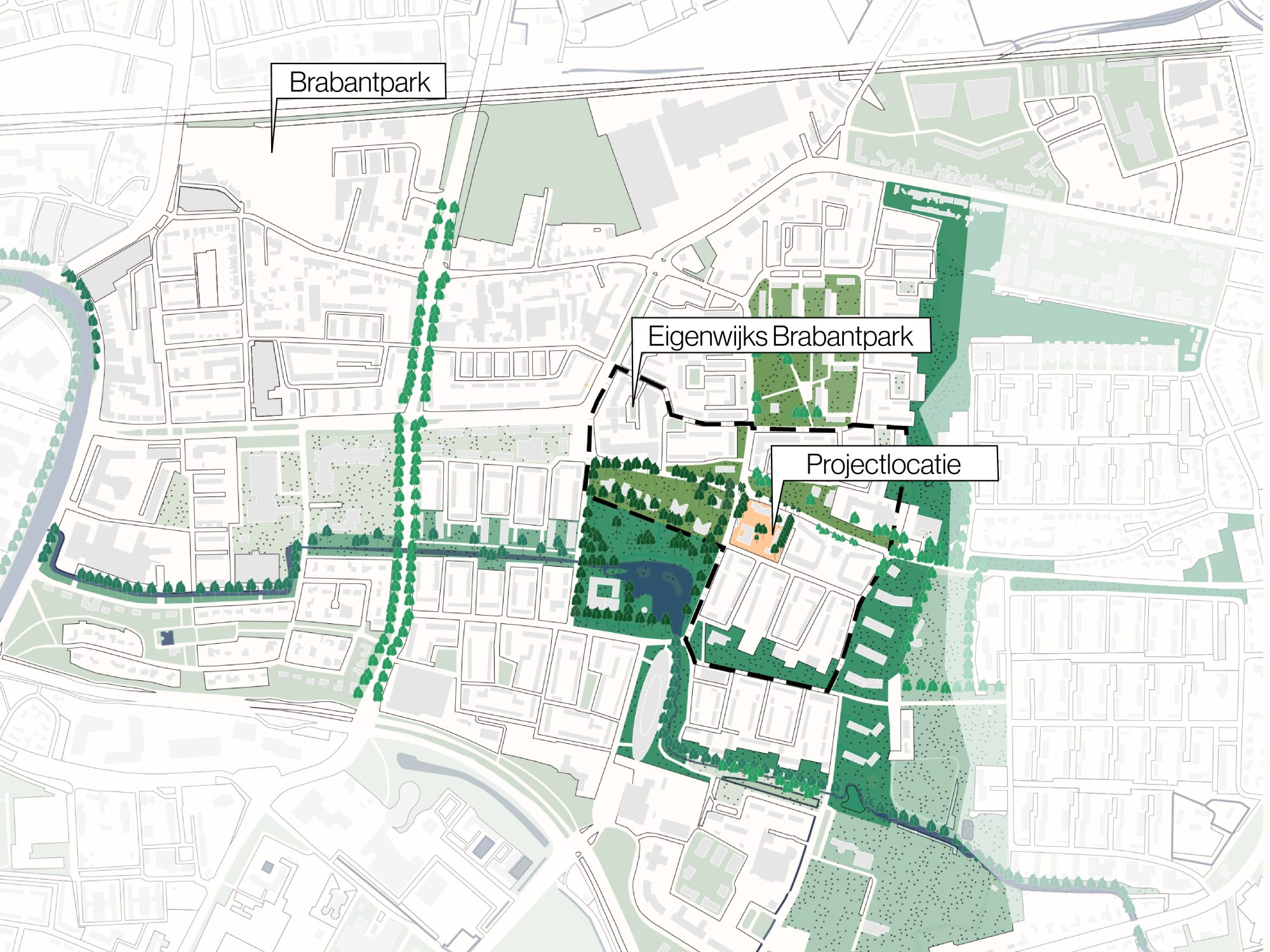
Since 2006, care has been provided at Kangoeroestraat 1 to 24 residents who are no longer able to live independently at home. Due to the aging of the building and changes in the care concept of the provider Thebe, this location is due for redevelopment. Housing association Alwel is responding to the growing demand for suitable housing and care facilities in the neighborhood.
The redevelopment focuses on creating a dementia-friendly living environment in which care can be organized more efficiently and remain accessible. In the immediate vicinity, two school buildings are vacant, offering opportunities to acquire and develop municipal land. By incorporating these sites, space is created for new construction and an innovative, future-proof, and affordable housing-care concept. This concept enables older adults to live independently for longer and offers people with care needs the opportunity to be part of a collective living environment.
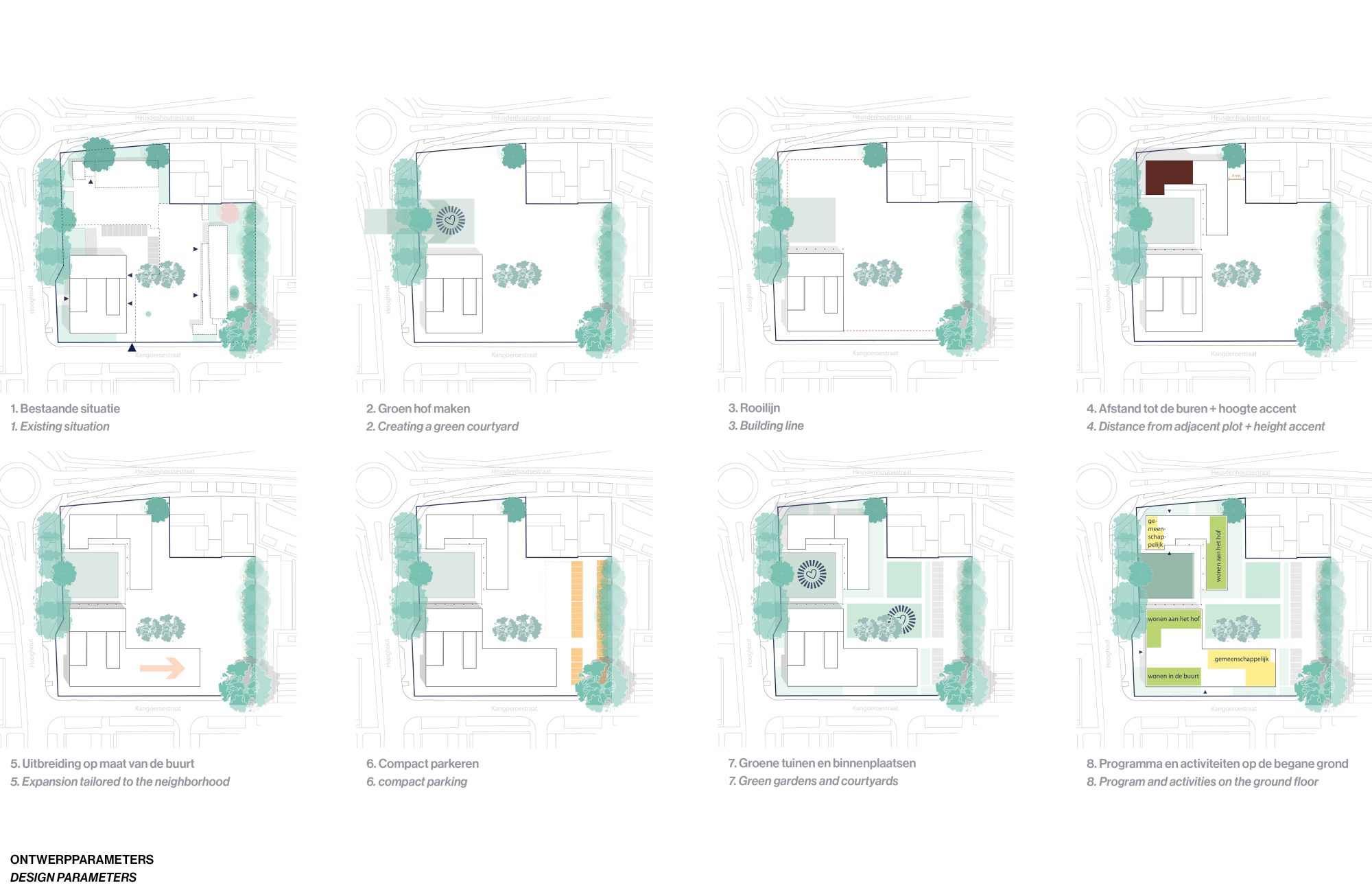
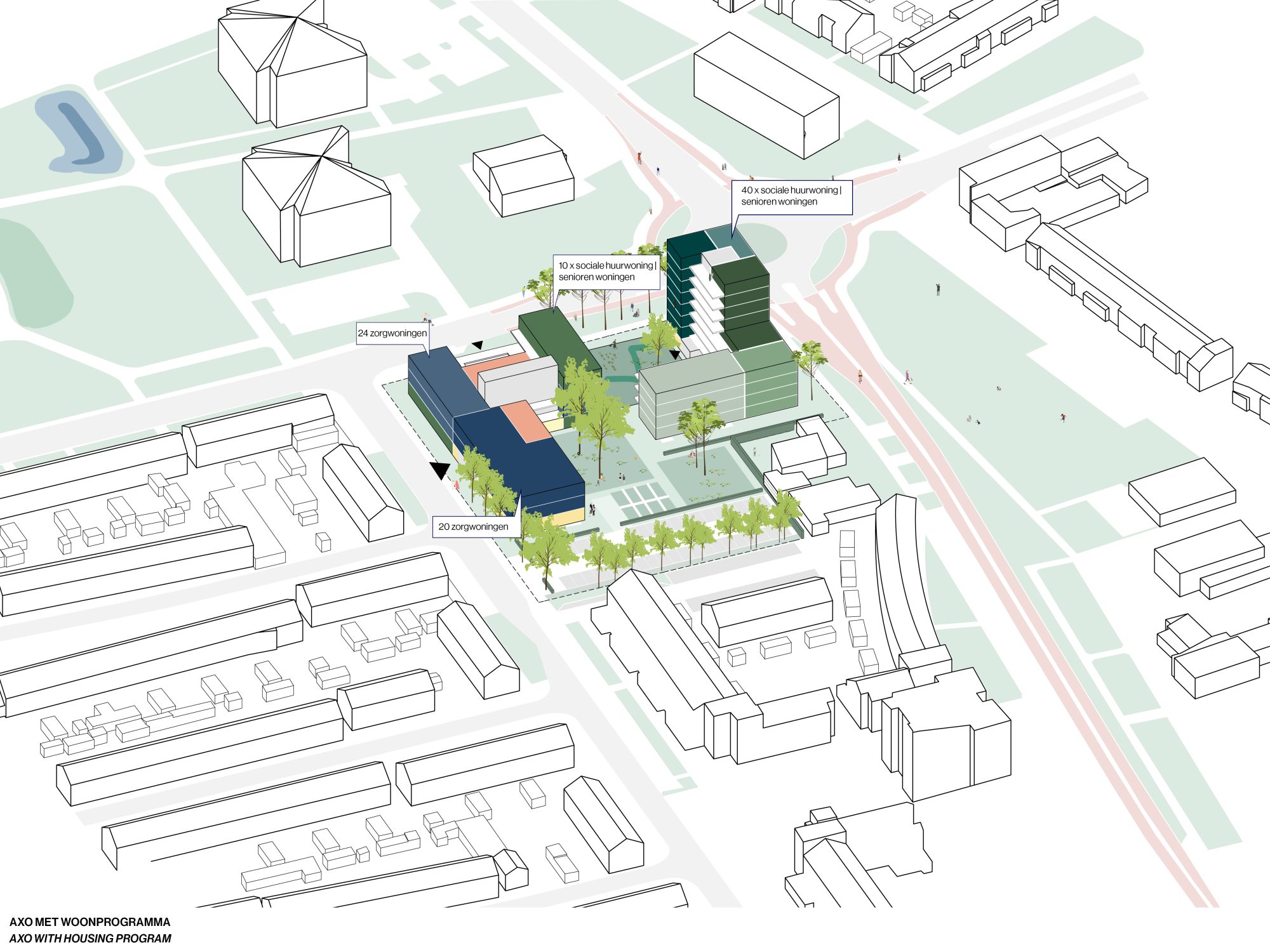
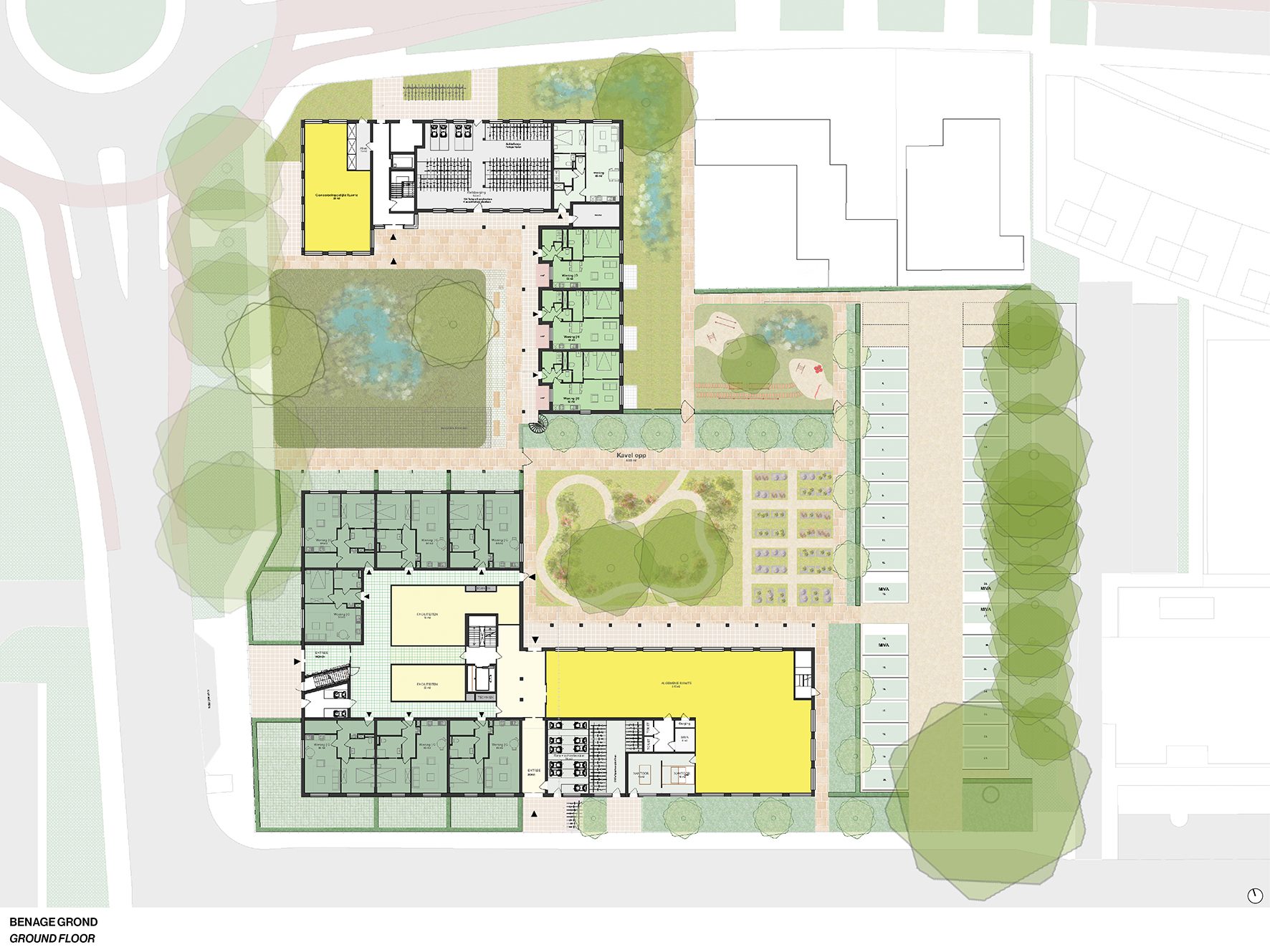
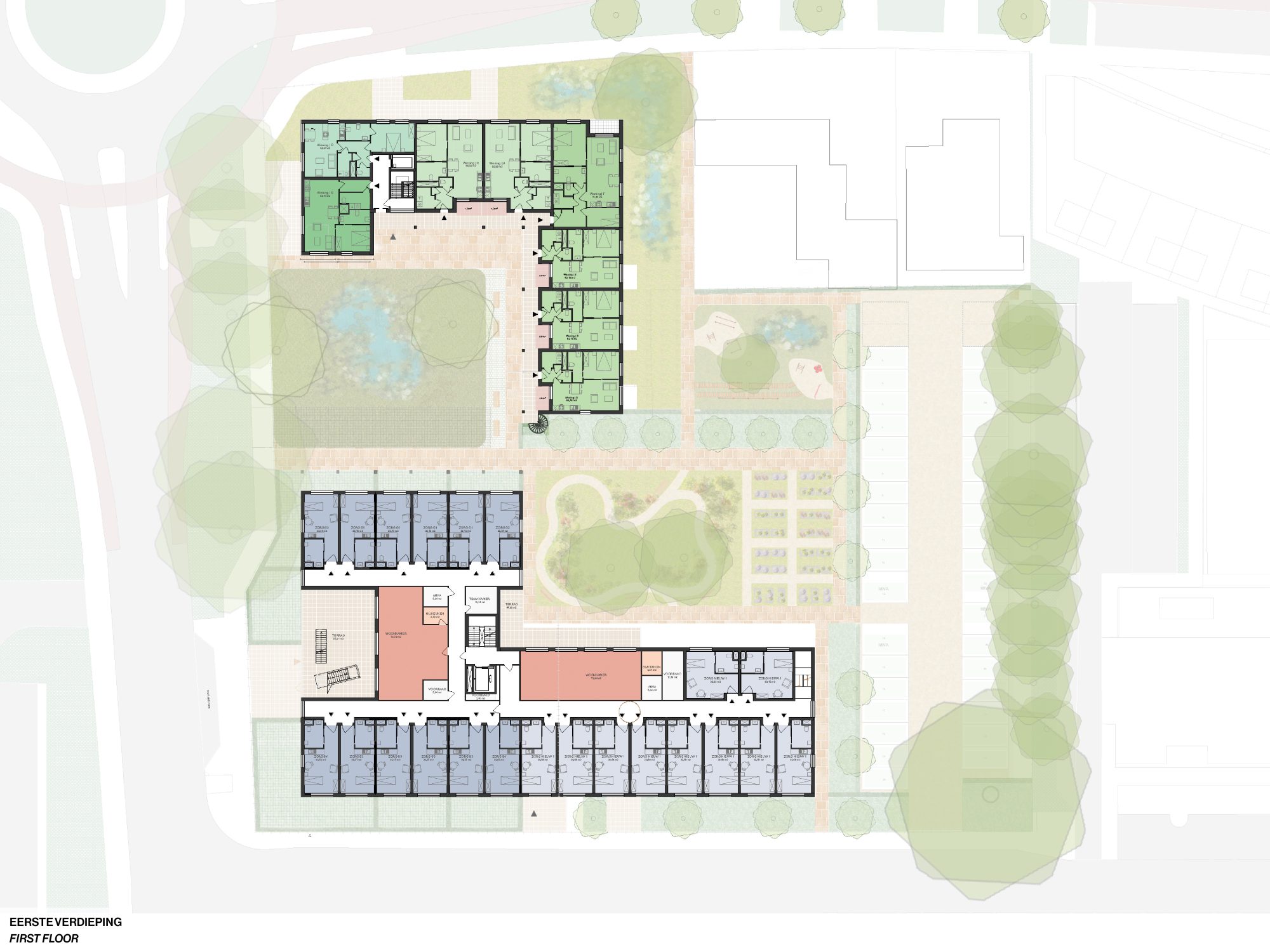
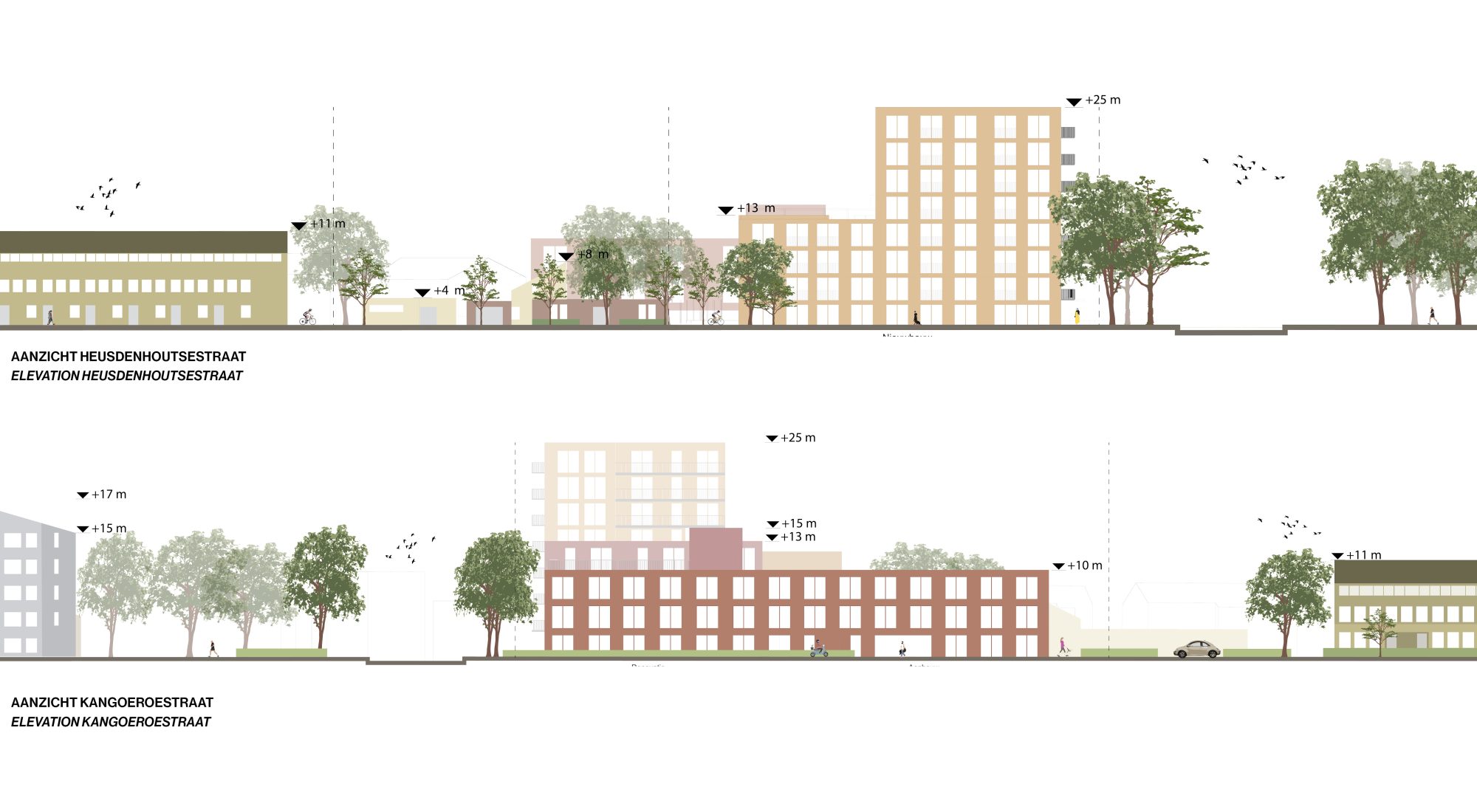
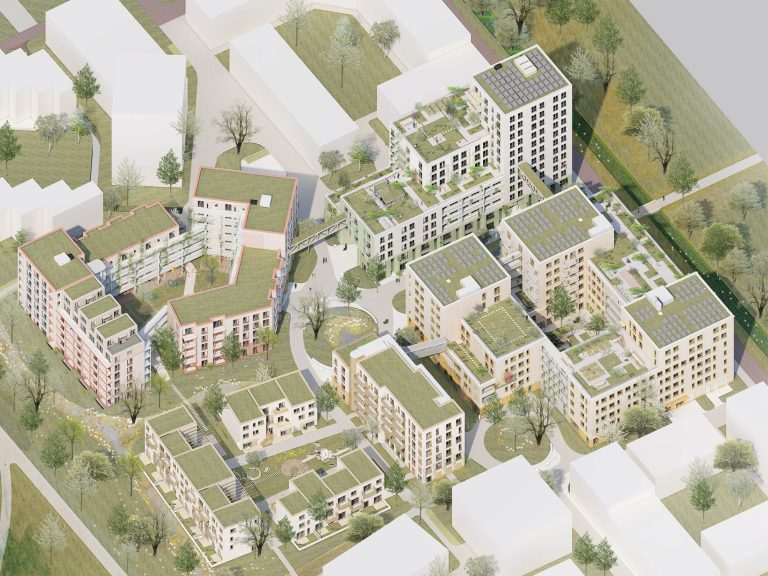
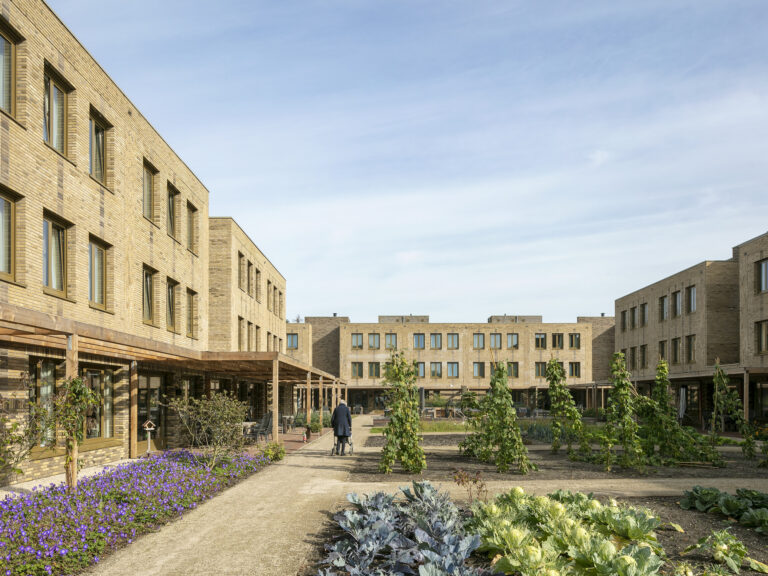
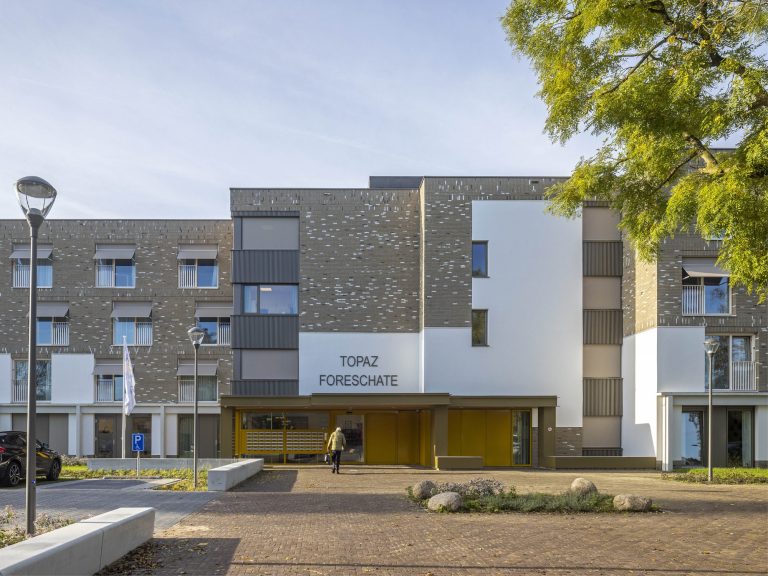
Through a combination of transformation and new construction, the existing building from 2006 will be preserved. The plan includes 44 intramural care units with shared living rooms within the existing structure and its extension. This extension makes it possible to double the number of care units and adapt them to current standards, resulting in a future-proof and affordable care concept. Facilities and a meeting space for the neighborhood will be located on the ground floor. These collective amenities contribute to social contact and shared activities. By visually and physically connecting indoor and outdoor spaces, participation in social activities with the neighborhood becomes more accessible.
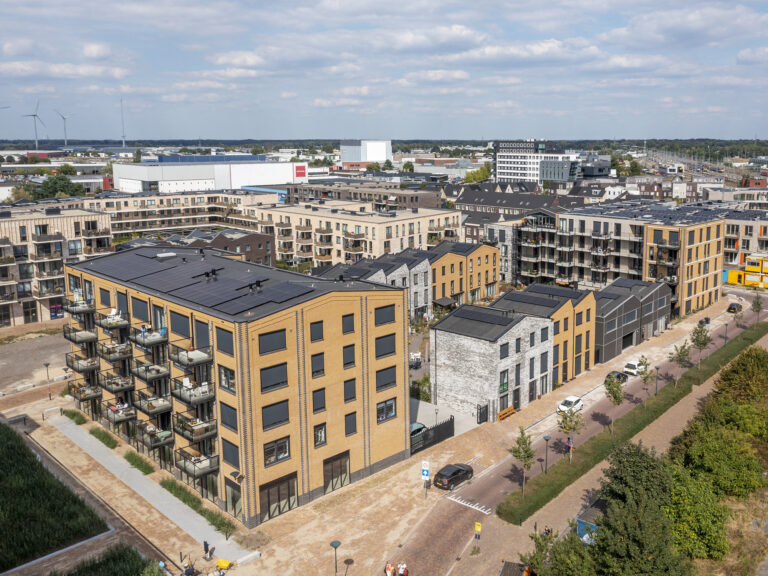
In addition, approximately 50 social, life-course-adaptable rental homes will be realized on the site of the two current school buildings, ranging from two- to three-room apartments. These homes will feature a wide access gallery and a shared meeting space on the ground floor.
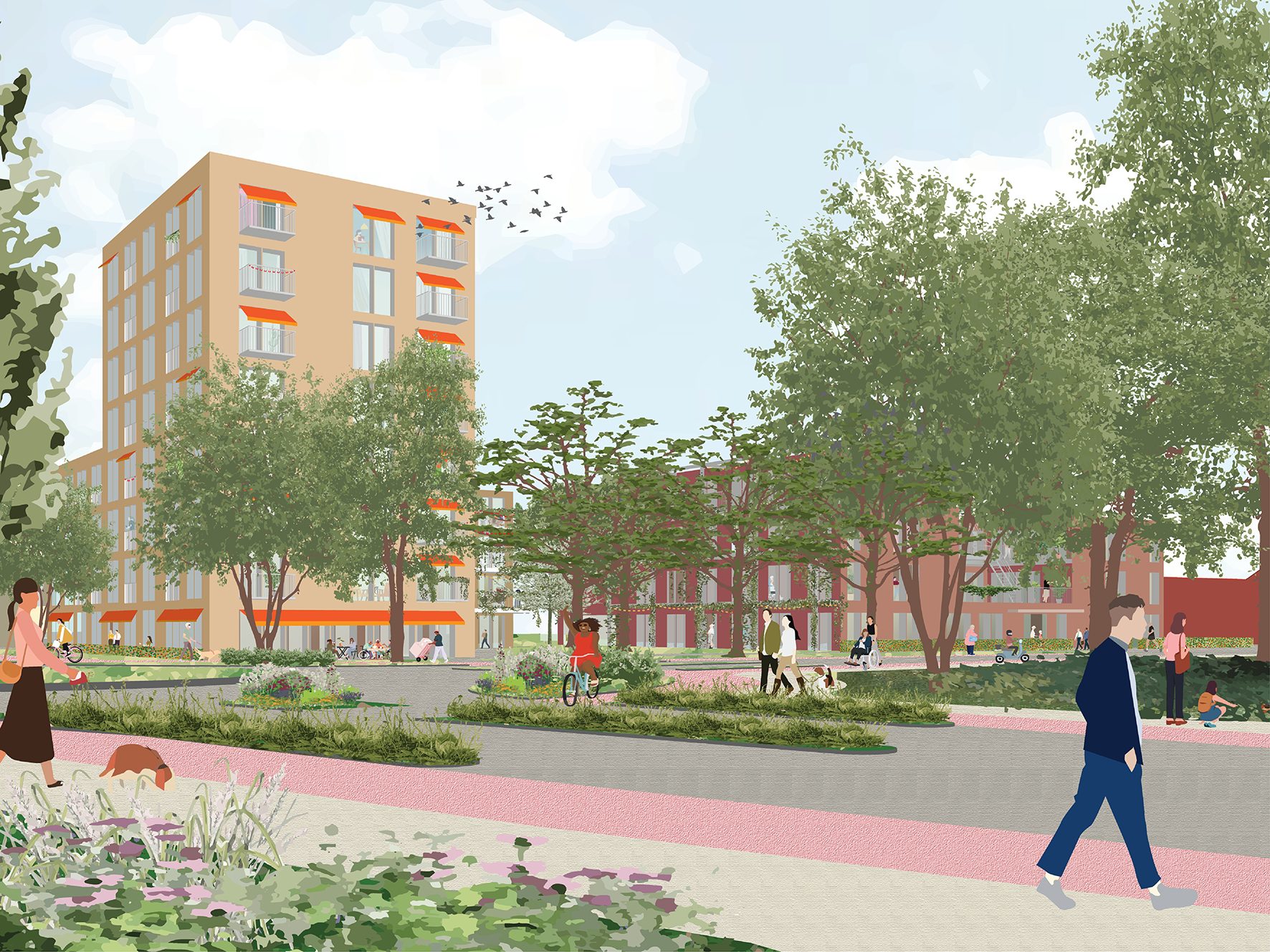
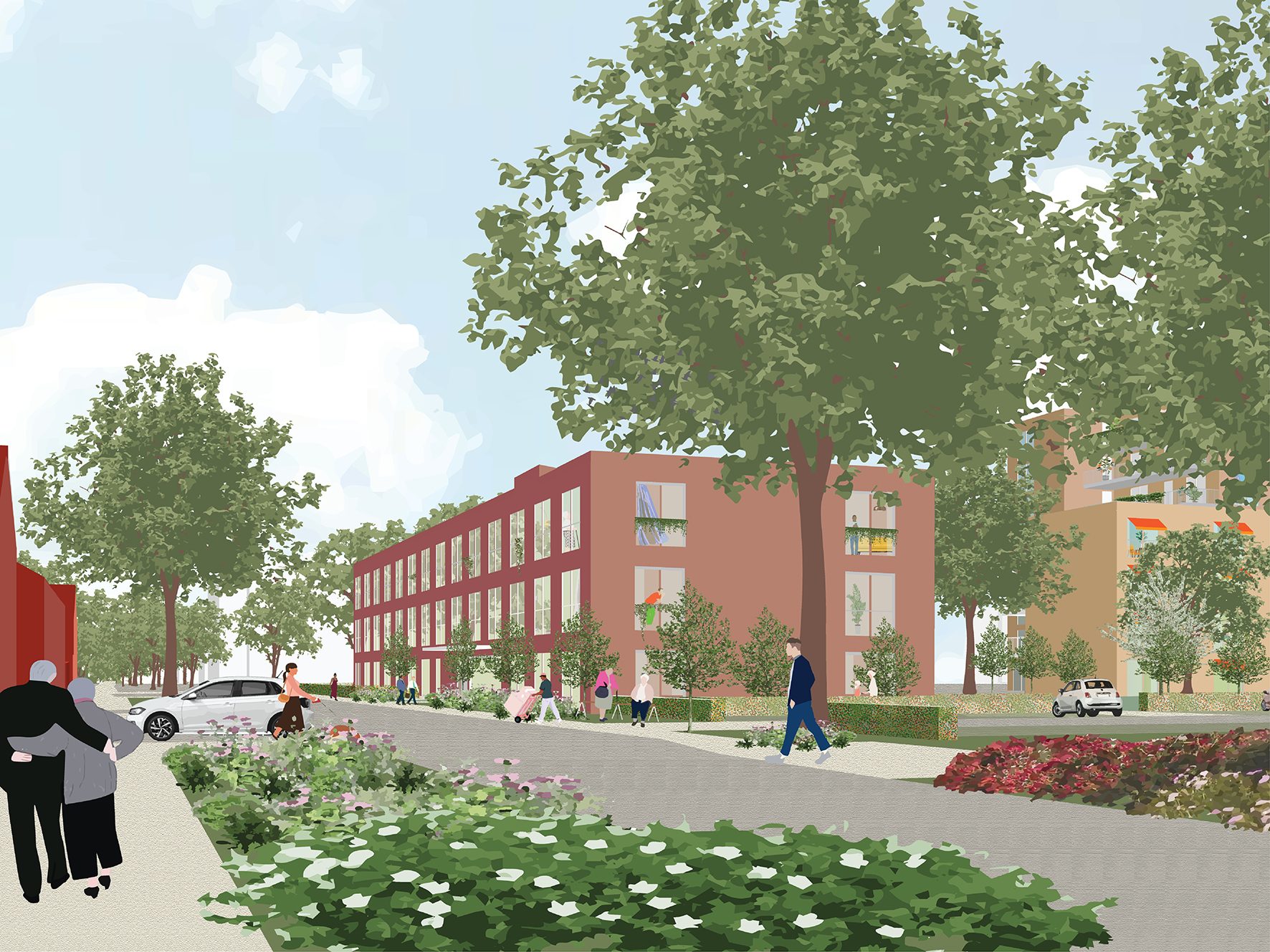
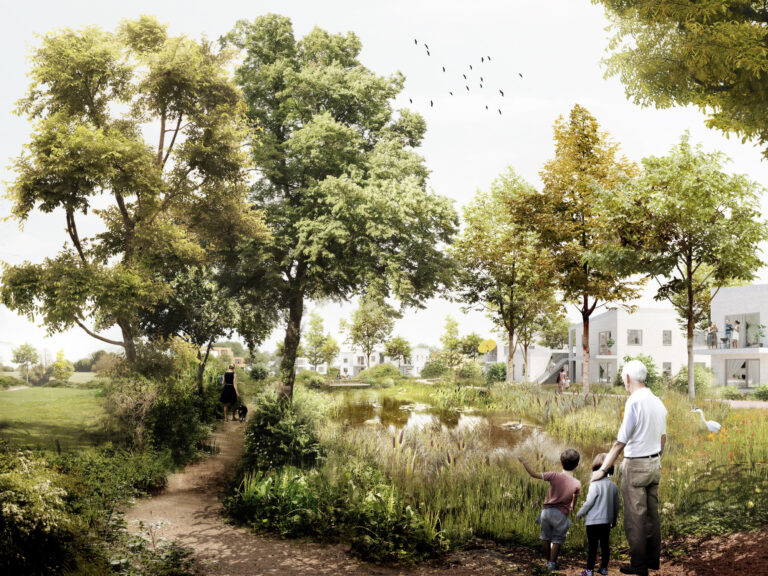
A strong emphasis is placed on the quality of the living environment. The addition of greenery, meeting places, and a high-quality design of public space strengthens social cohesion and community building. This contributes to both the physical and mental well-being of residents and the Brabantpark district. Specifically for the intramural target group, a protected environment will be created in the inner garden. This garden will become an experiential garden, rich in color and scent, combined with a design that encourages movement and is dementia-friendly. Walking routes stimulate physical activity, encounters, and social interaction.
The Brabantpark district has a diverse housing stock, with approximately 30% social housing and a mix of dwelling types. Around 16% of residents are aged 65 or older, increasing the demand for care and adapted housing. By adding life-course-adaptable rental homes, this project contributes to housing mobility within the district and responds to population aging.
The project aligns with the Eigenwijks Brabantpark program (launched in 2021), in which various parties collaborate on future-proof elderly care. At the same time, it addresses broader societal challenges such as aging, housing shortages, and the need for appropriate housing models. The guiding principle is clear: a safe, vibrant, and connected living environment for residents, the neighborhood, and the district.