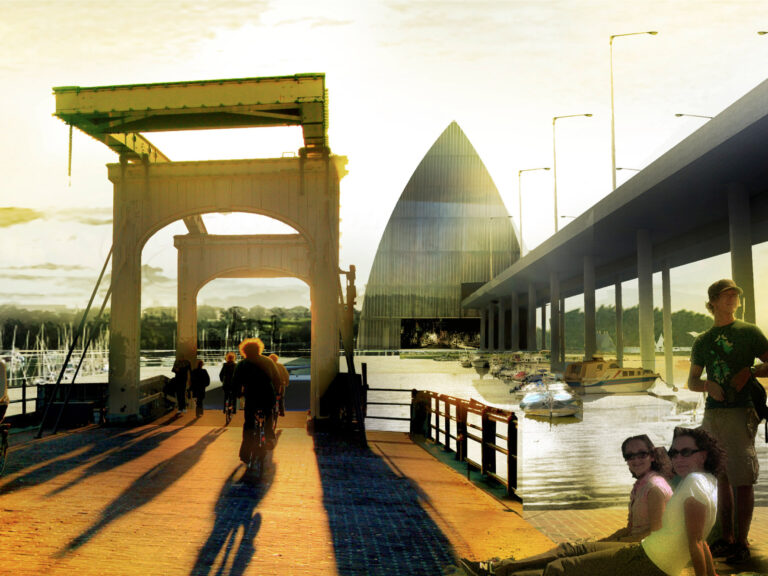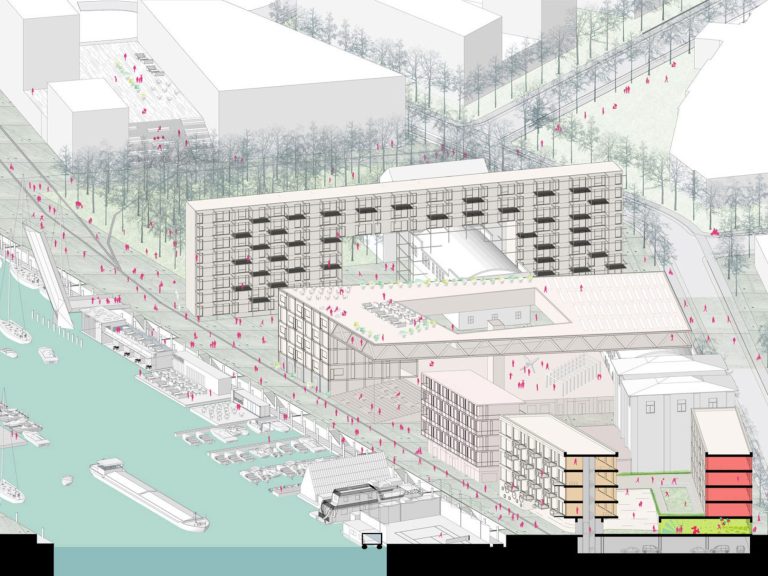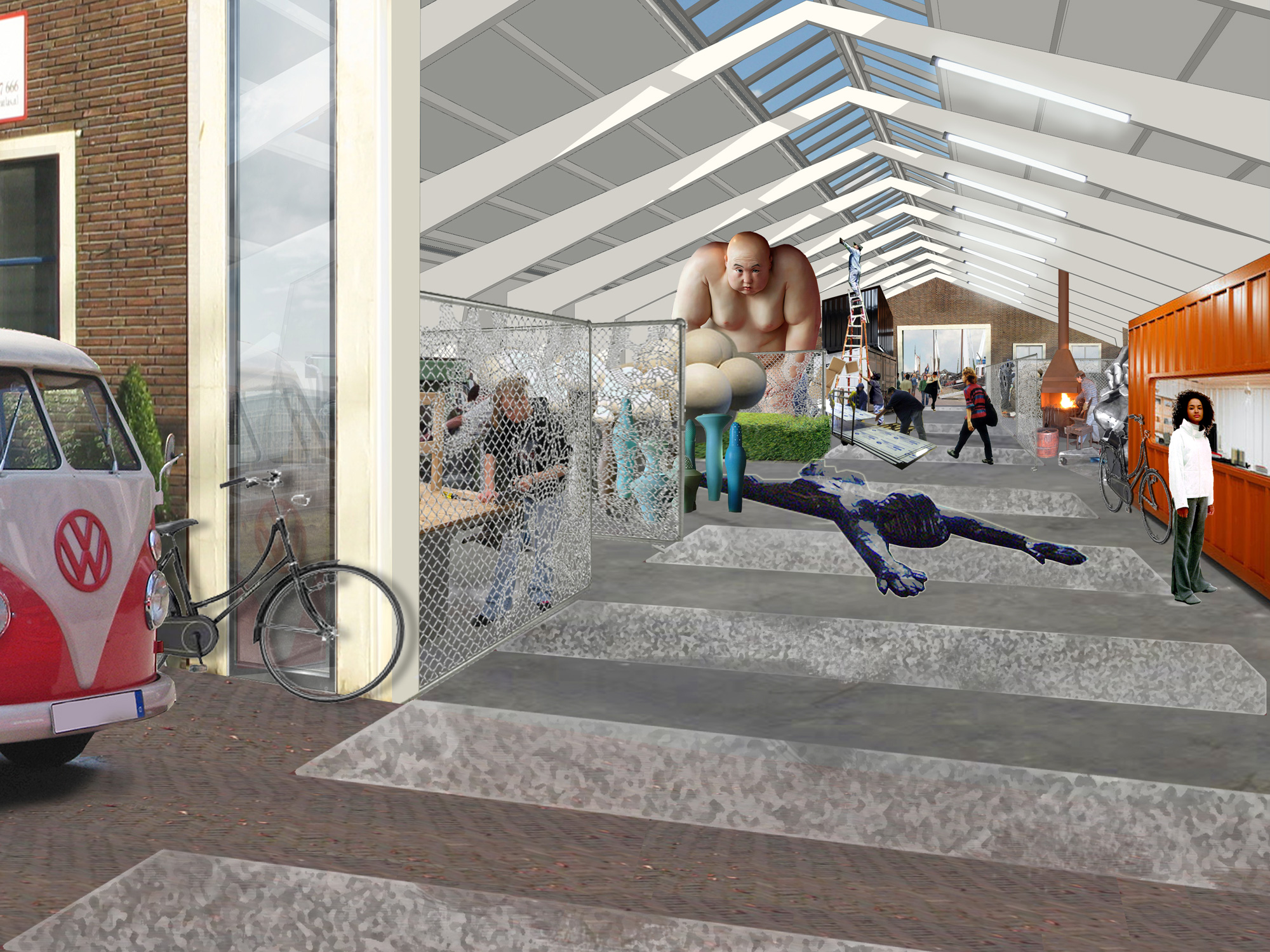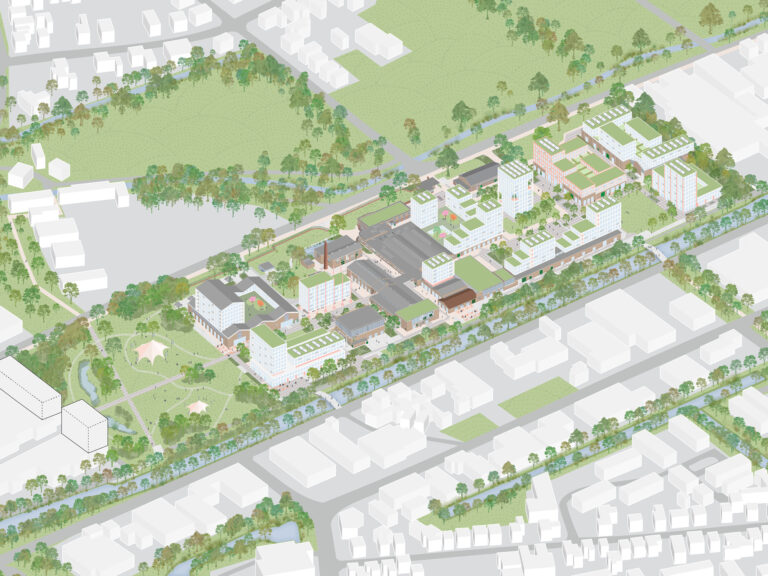
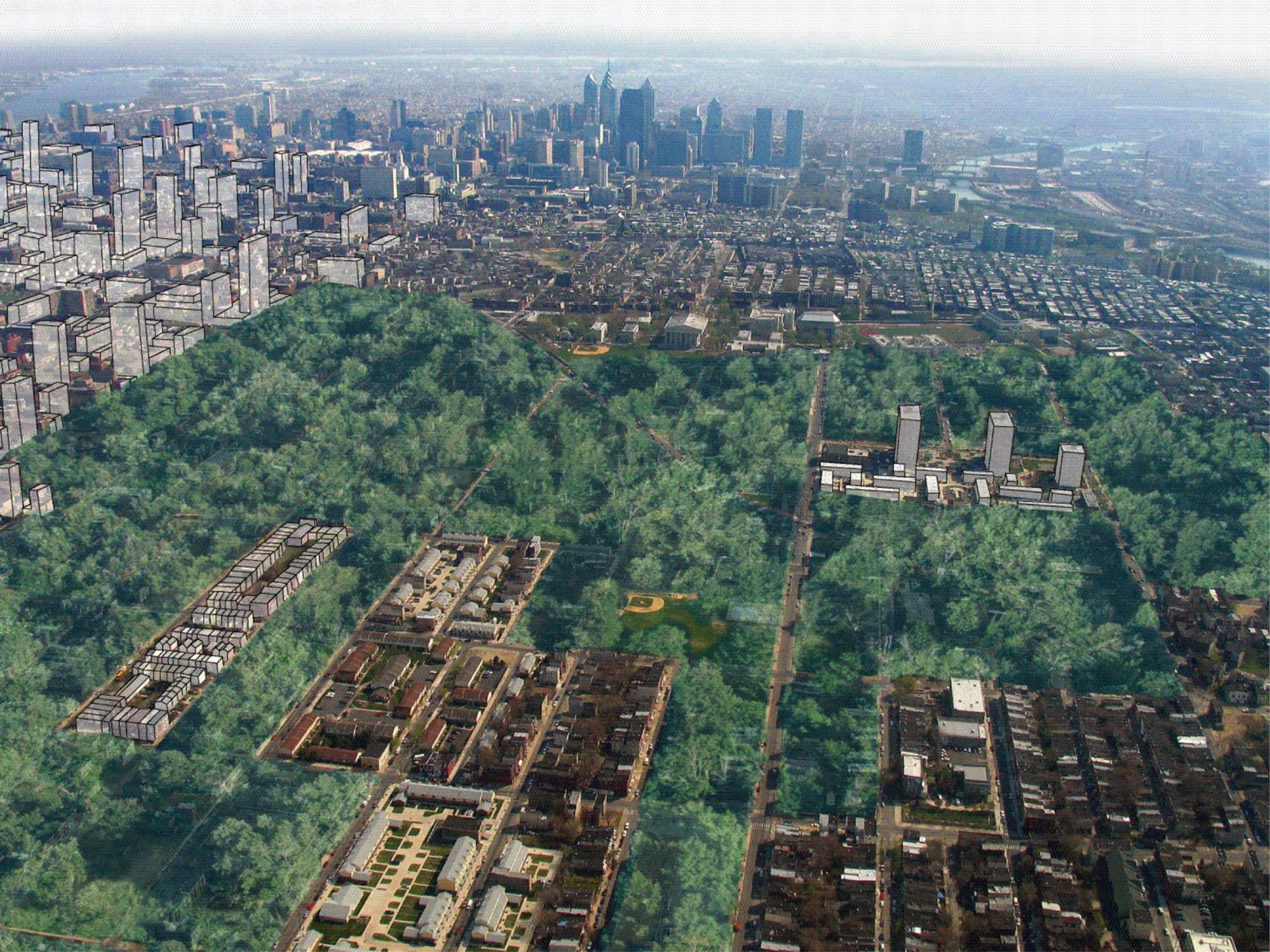
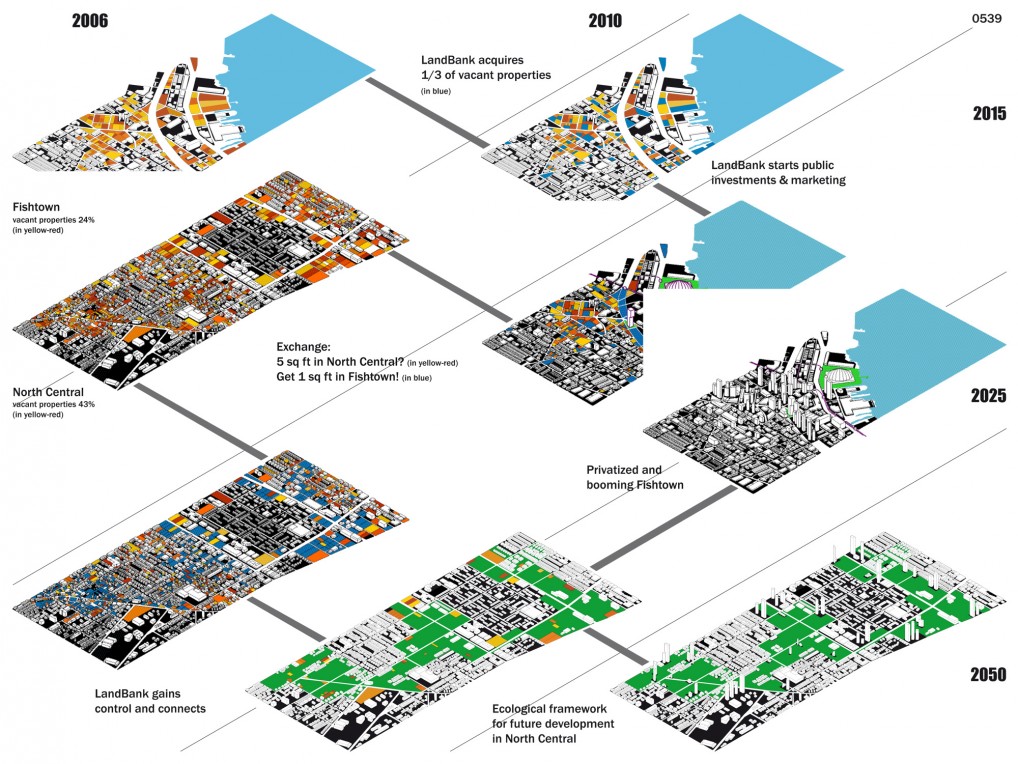
Philadelphia is a blessed city. Cities around the globe will envy its enormous potential development space within urban borders. It offers a wide range of opportunities for urban regeneration within a sustainable framework. But Philadelphia is also facing severe problems. The city has to much open space: where to start investing? Properties are fragmented: how to realize critical mass? Landowners feel trapped: what to do and where? A structural approach is needed. We call it The Philadelphia LandBank. The Philadelphia LandBank creates clear priorities, sustainable coherence and equal chances for all. How? By defining a focal point for public investments, densification and marketing. Waterfront Fishtown, with 24% vacant properties (2003), could be such a future focal point of money, energy and pride. But is such a decision fair towards people in for example North Central, who will not profit from investments and rising land values there? No! For that reason The Philadelphia LandBank only invests in Fishtown, after landowners in this area hand over a third of their vacant properties. People from North Central and other neighborhoods can acquire one of these potentially high-value plots if they want to exchange their vacant properties to a 5:1-rate. This rate stimulates small landowners to join forces and cooperate in order to obtain a property in booming and privatizing Fishtown. The Philadelphia LandBank gains control in North Central, where it is able to reconnect individual pieces of land to a bigger ecological picture as a stronghold for future (> 30 years) urban development.
Urban Voids
Scroll voor meer info
Scroll for more info
The Philadelphia LandBank
Informatie
Information
Status: Designed 2005
Location: Philadelphia, VS
Client: Philadelphia
Team: Johan De Wachter
Collaboration: WLTC
Urban Voids
For more information about Urban Voids, please contact:
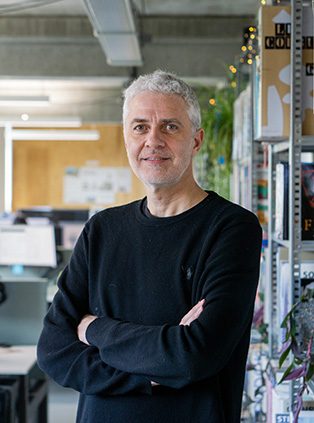
Johan De Wachter
Johan de Wachter is an architect and founding partner at Woonwerk Architecten. He came to Rotterdam after his studies at the Catholic University of Louvain (KUL) and worked from 2000 to 2004 at the Office for Metropolitan Architecture (OMA/Rem Koolhaas) on various urban planning and architecture projects and competitions. In 2003 he founded Fün Design Consultancy and was a partner until 2005. In 2005 he founded Johan De Wachter Architecten and in 2011 he started 2DVW Architecten in Antwerp together with Rik De Vooght. In 2023, the agencies are given a new name. With the establishment of Woonwerk Architecten, the collaboration is given further shape. With Woonwerk, Johan works on projects at home and abroad.
Johan regularly teaches and has been, among others, a guest lecturer at Delft University of Technology, the Academy of Architecture in Rotterdam and the Fontys University of Applied Sciences in Tilburg. He was appointed associate professor of urban design at Kaunas University of Technology in 2015. Here he leads the design studios with a specific focus on the integral transformation of former soviet residential areas (microrayons). Johan De Wachter was selected in 2014 for the “Europe 40 Under 40 Award”. This award recognized Johan as one of the 40 leading young design talents from Europe.
In addition to his work as an architect and teacher, Johan regularly sits on various committees and juries in the Netherlands and abroad. He is currently a member of the spatial quality committee in Breda (NL) and of the environmental committee in Tilburg (NL).
More about Johan